
International Freight Forwarding: A Complete Guide for Exporters
Understand how international freight forwarding works, from carrier selection and cargo planning to customs coordination and final delivery across global trade routes.
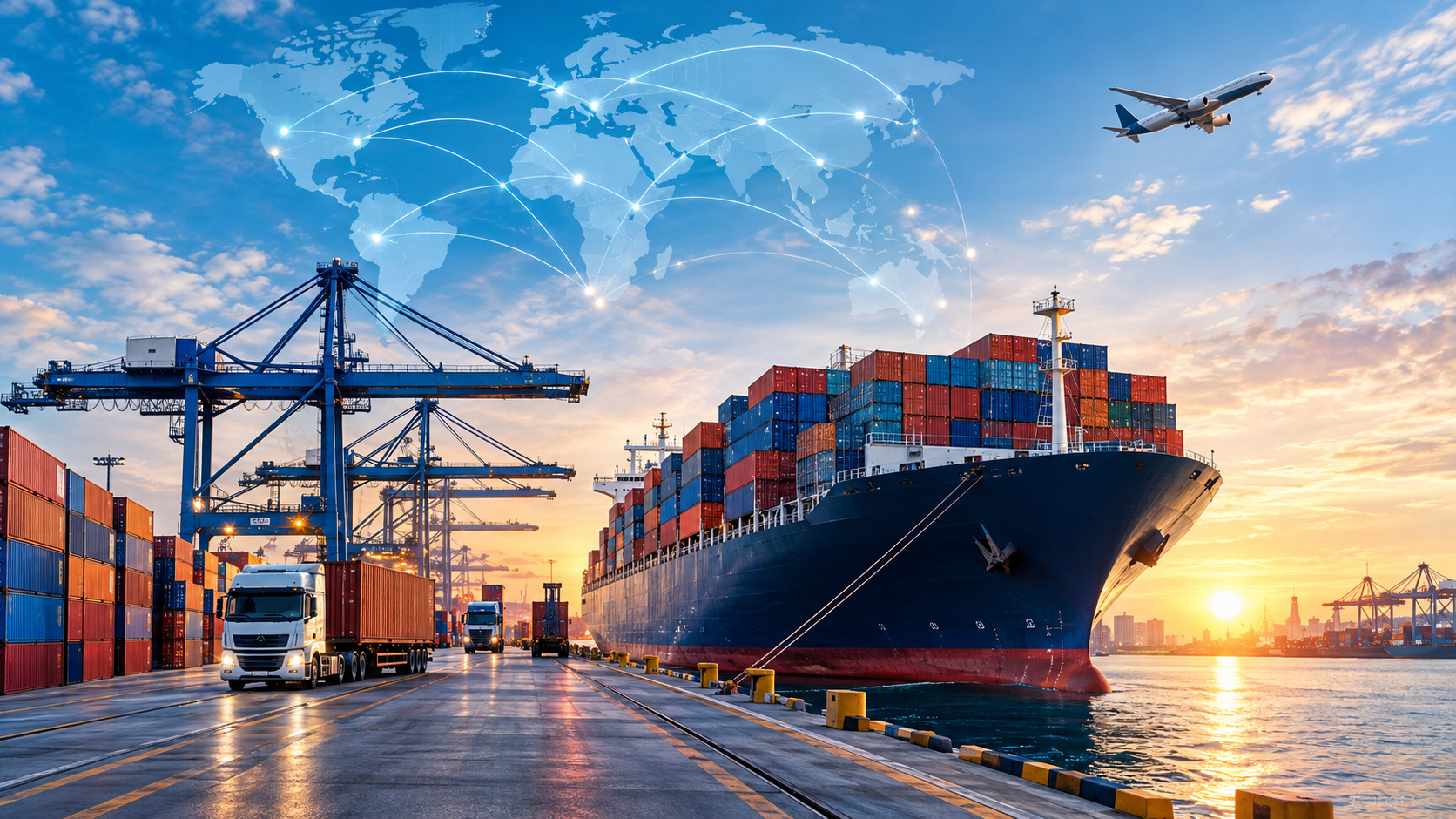
International Freight Forwarding: A Complete Guide for Exporters
International trade allows businesses to reach customers and markets around the world, but moving goods across borders involves much more than simply booking a shipment.
Exporters need to coordinate transportation, documentation, customs procedures, carrier schedules, cargo handling and final delivery. This is where international freight forwarding becomes an important part of the global supply chain.
A freight forwarding partner helps coordinate the movement of cargo from the point of origin to its destination while managing the operational steps involved in international transportation.
For exporters, understanding how freight forwarding works can make it easier to plan shipments, control logistics costs and maintain better visibility throughout the transportation process.
What Is International Freight Forwarding?
International freight forwarding is the coordination and management of cargo transportation between countries.
A freight forwarder works with exporters, importers, shipping lines, airlines, transport providers, customs professionals and other logistics partners to coordinate the movement of goods.
Depending on the shipment, freight forwarding can involve:
- Ocean freight
- Air freight
- Road transportation
- Rail transportation
- Multimodal transportation
- Cargo consolidation
- Customs coordination
- Shipment tracking
- Documentation
- Final-mile delivery
The objective is to create a coordinated transportation process from the exporter’s facility to the final destination.
SkyLink Global describes its logistics practice as covering ocean and air freight, multimodal transportation, shipment visibility, cargo transportation and customs-clearance support.
Why Freight Forwarding Matters for Exporters
International shipments often involve multiple parties and transportation stages.
An exporter may need to coordinate:
- Factory or warehouse pickup
- Export documentation
- Inland transportation
- Port or airport handling
- Customs clearance
- Carrier booking
- International transportation
- Destination handling
- Customs procedures
- Final delivery
Without proper coordination, delays or documentation issues at one stage can affect the rest of the shipment.
A structured freight-forwarding process helps bring these activities together and provides exporters with a clearer view of the shipment journey.
Key Transportation Modes
1. Ocean Freight
Ocean freight is commonly used for larger shipments and international cargo that does not require the speed of air transportation.
It can be suitable for:
- Full Container Load (FCL)
- Less than Container Load (LCL)
- Heavy cargo
- Large-volume shipments
- Non-urgent international consignments
FCL allows an exporter to use a dedicated container, while LCL allows cargo from different shippers to be consolidated.
The right option depends on cargo volume, destination, schedule and commercial requirements.
2. Air Freight
Air freight is generally selected when speed is an important consideration.
It can be useful for:
- Time-sensitive shipments
- High-value products
- Samples
- Critical spare parts
- Certain pharmaceutical or specialized cargo
Although air transportation can have a higher freight cost than ocean transportation, the shorter transit time can be valuable for specific supply-chain requirements.
3. Multimodal Transportation
Some international shipments require more than one mode of transportation.
For example, cargo may move by:
Factory → Road → Port → Ocean → Destination Port → Road → Final Warehouse
This is known as multimodal transportation.
Proper coordination between each transportation stage is important because delays at one point can affect the entire delivery schedule.
Important Documents in International Shipping
Documentation is one of the most important parts of export logistics.
Depending on the shipment, exporters may need documents such as:
- Commercial Invoice
- Packing List
- Shipping Bill
- Bill of Lading
- Air Waybill
- Certificate of Origin
- Export-related certificates
- Insurance documents
- Other regulatory or product-specific documentation
The exact documentation requirements can vary depending on the commodity, destination country, trade arrangement and applicable regulations.
Accurate documentation helps reduce avoidable discrepancies during customs and transportation processes.
SkyLink Global's documentation practice includes commercial invoices, shipping bills, bills of entry and certificates of origin as part of its trade-support services.
The Role of Customs in Freight Forwarding
Customs clearance is another important stage of international trade.
Export shipments need to meet applicable customs and regulatory requirements before cargo can proceed through the relevant gateway.
This can involve:
- Documentation verification
- Product classification
- Customs filing
- Regulatory checks
- Duty or tax-related requirements where applicable
- Communication with customs authorities
Proper preparation before cargo reaches the gateway can help reduce avoidable operational problems.
Exporters should ensure that their documentation and shipment information are accurate and consistent before dispatch.
How Shipment Tracking Improves Visibility
Once cargo has left the origin, exporters need visibility into its movement.
Shipment tracking can provide information about:
- Current shipment status
- Carrier milestones
- Estimated arrival
- Port movements
- Transshipment events
- Delivery progress
Better visibility allows businesses to communicate more effectively with customers and prepare warehouses or receiving teams for incoming cargo.
Modern logistics operations increasingly combine tracking systems, shipment data and analytics to provide better supply-chain visibility.
How Exporters Can Optimize Freight Costs
Freight cost is not determined only by the transportation rate.
The overall logistics cost can also be affected by:
- Cargo volume
- Weight
- Transportation mode
- Route
- Container utilization
- Origin and destination
- Port charges
- Handling charges
- Storage
- Detention or demurrage
- Insurance
- Documentation
- Delivery requirements
Exporters can therefore look beyond simply finding the cheapest freight quote.
A better approach is to evaluate the total landed logistics cost and compare transportation options based on both price and operational requirements.
Carrier selection, route planning, consolidation and shipment scheduling can all play a role in freight-cost management.
Choosing Between FCL and LCL
For ocean shipments, exporters may need to decide between FCL and LCL.
FCL — Full Container Load
FCL may be suitable when the shipment volume is large enough to justify a dedicated container.
Potential advantages include:
- Dedicated container space
- Reduced cargo handling
- Better control over loading
- Suitable for larger shipment volumes
LCL — Less than Container Load
LCL can be useful when the cargo does not require a full container.
Cargo is consolidated with shipments from other exporters.
This can provide a practical option for smaller shipment volumes, although additional consolidation and handling stages may need to be considered.
The appropriate choice depends on cargo volume, destination, schedule and overall logistics economics.
The Importance of Incoterms
Incoterms help define responsibilities between buyers and sellers in international trade.
Commonly used terms include:
- EXW
- FCA
- FOB
- CIF
- CFR
- DAP
- DDP
These terms can determine which party is responsible for different parts of transportation, costs and risk.
Exporters should understand their agreed commercial terms before arranging freight because transportation responsibilities can vary significantly between different Incoterms.
A Typical Export Freight-Forwarding Journey
A simplified international shipment can follow this sequence:
Step 1 — Shipment Planning
Understand the cargo, destination, required delivery timeline and commercial terms.
Step 2 — Documentation
Prepare the required commercial and regulatory documents.
Step 3 — Transportation Planning
Select the appropriate transportation mode and route.
Step 4 — Pickup & Origin Handling
Move the cargo from the supplier or warehouse to the relevant gateway.
Step 5 — Customs & Gateway Processing
Complete applicable export procedures and gateway handling.
Step 6 — International Transit
Cargo moves through the selected ocean, air or multimodal route.
Step 7 — Destination Handling
Cargo reaches the destination gateway and proceeds through applicable import processes.
Step 8 — Final Delivery
Cargo is transported to the final consignee or warehouse.
This structured approach helps exporters understand where responsibilities, documentation and logistics coordination are required.
How Technology Is Changing Freight Forwarding
Technology is becoming an increasingly important part of modern logistics.
Digital systems can help businesses manage:
- Shipment tracking
- Documentation
- Transportation data
- Communication
- Reporting
- Route information
- Supply-chain visibility
Centralized digital information can reduce dependence on disconnected spreadsheets, emails and manual updates.
For businesses handling multiple international shipments, better data visibility can make logistics planning more organized and responsive. SkyLink Global also highlights shipment tracking, telemetry and corridor analytics within its logistics offering.
What Should Exporters Look for in a Freight Forwarding Partner?
Before selecting a freight-forwarding partner, exporters can evaluate several factors:
Global Network
Does the provider have access to the trade corridors and destinations relevant to your business?
Transportation Options
Can they support ocean, air or multimodal requirements?
Customs & Documentation Support
Can they coordinate the documentation and customs processes required for your shipments?
Shipment Visibility
Can you track important shipment milestones?
Communication
Will you have a clear point of contact for shipment updates and operational issues?
Cost Transparency
Are freight and associated logistics charges clearly explained?
Specialized Requirements
If your cargo requires temperature control, special handling or additional compliance, does the provider have the necessary capabilities?
Conclusion
International freight forwarding is an important part of successful global trade.
From selecting transportation modes and preparing documentation to coordinating customs, tracking cargo and arranging final delivery, every stage contributes to the overall shipment experience.
For exporters, a well-planned logistics process can provide better visibility, more organized operations and improved control over international shipments.
The right freight-forwarding strategy should therefore consider more than transportation price alone. Cargo requirements, route, documentation, customs, transit time, visibility and total logistics cost should all be considered when planning international shipments.
For businesses expanding into international markets, working with an experienced logistics partner can help simplify the operational complexity involved in moving goods across borders.
EXIM & Logistics Specialist at SkyLink Global Services. Specializing in statutory customs compliance, freight procurement, and international cross-border multimodal routing.