
How Businesses Can Reduce Logistics Delays in International Shipping
Learn how businesses can reduce international shipping delays through better planning, documentation, shipment visibility, and digital logistics technology.
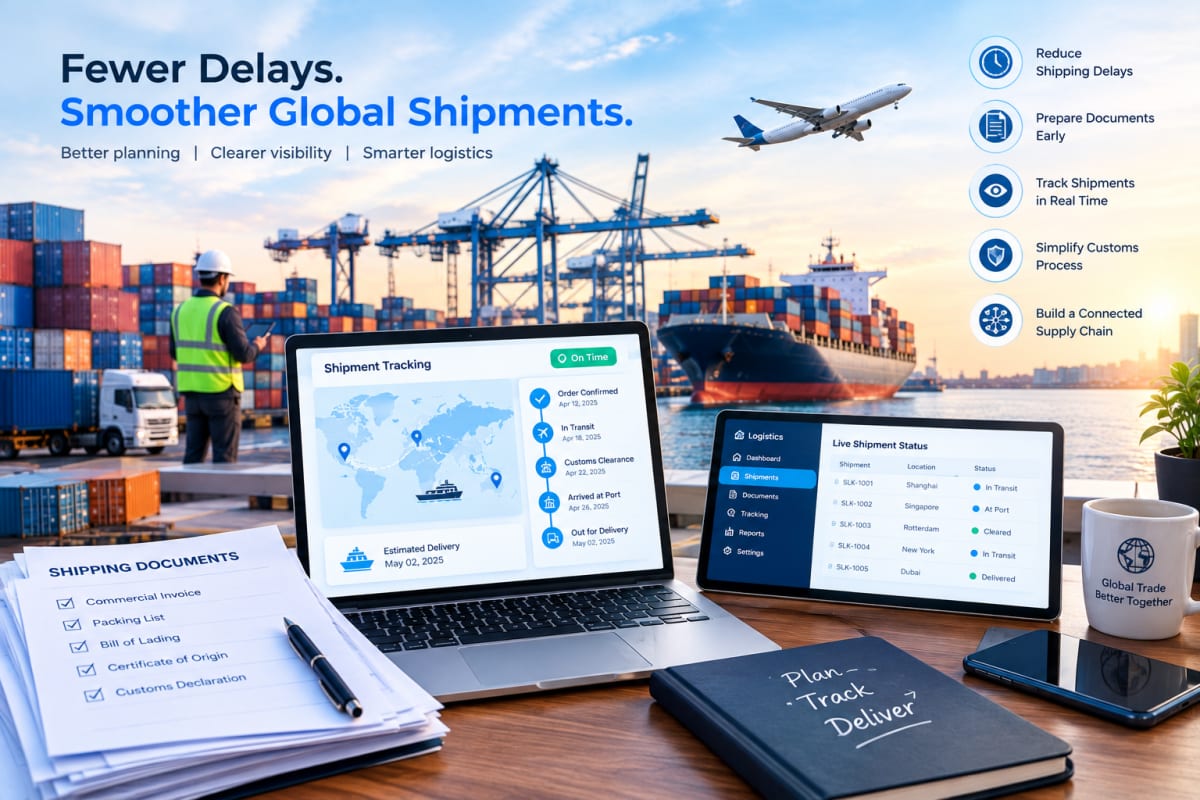
Introduction
International shipping involves multiple stages, including documentation, customs clearance, transportation, warehousing, and final delivery.
A delay at any stage can affect delivery schedules, customer satisfaction, and overall logistics costs.
With better planning and digital logistics tools, businesses can identify common causes of delays and improve shipment coordination.
1. Prepare Shipping Documents Early
Incomplete or incorrect documentation is one of the common reasons for shipment delays.
Businesses should prepare important documents such as commercial invoices, packing lists, shipping documents, and customs paperwork before the shipment reaches the next stage.
Proper document management can help reduce unnecessary processing time.
2. Improve Shipment Visibility
Businesses need clear visibility into where their shipments are and what stage they have reached.
Digital shipment tracking systems can provide updates about important milestones and help logistics teams identify potential delays earlier.
This allows teams to take corrective action instead of waiting until a shipment is already late.
3. Plan Customs Requirements
Customs procedures can vary depending on the destination, product category, and applicable regulations.
Businesses should review customs requirements before shipping and ensure that the required information and documentation are accurate.
Early preparation can help avoid unnecessary clearance issues.
4. Use Digital Logistics Platforms
Managing logistics through spreadsheets, emails, and disconnected systems can make it difficult to maintain accurate shipment information.
A centralized logistics platform can bring shipment tracking, documents, communication, and operational information together.
This gives teams a clearer view of the complete shipment lifecycle.
5. Maintain Better Communication
International shipments often involve exporters, importers, freight forwarders, transport providers, customs teams, warehouses, and customers.
Clear communication between these stakeholders can help prevent information gaps and reduce avoidable delays.
Automated shipment notifications can also help keep customers and internal teams updated.
6. Monitor Recurring Delays
Businesses should analyze previous shipments to identify recurring problems.
For example, delays may repeatedly occur because of documentation issues, customs processing, transportation capacity, or warehouse coordination.
Tracking this information can help companies identify areas where operational improvements are required.
7. Build a More Connected Supply Chain
Reducing logistics delays is not only about tracking individual shipments.
Businesses can improve their overall logistics operations by connecting documentation, shipment tracking, transportation, customs processes, and communication through digital systems.
A connected supply chain provides better visibility and supports faster operational decisions.
Conclusion
International shipping delays can affect delivery schedules, costs, and customer relationships.
Better documentation, early customs preparation, shipment visibility, communication, and digital logistics technology can help businesses manage their international shipments more effectively.
As global supply chains become more connected, businesses that organize their logistics operations around accurate data and timely information can build more efficient workflows.
EXIM & Logistics Specialist at SkyLink Global Services. Specializing in statutory customs compliance, freight procurement, and international cross-border multimodal routing.