
Global Trade Compliance: A Practical Guide for Importers and Exporters
Understand the key trade compliance requirements that importers and exporters need to manage when moving goods across international borders.
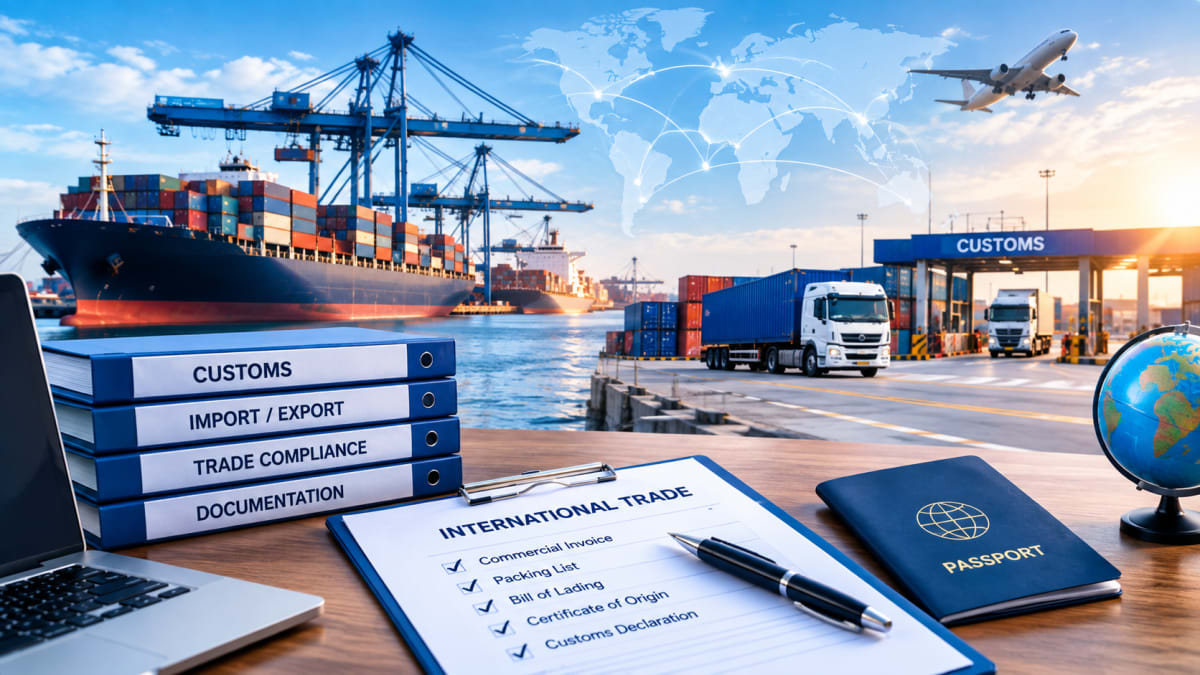
Global Trade Compliance: A Practical Guide for Importers and Exporters
International trade involves more than moving goods from one country to another. Importers and exporters must manage customs requirements, documentation, product classifications, duties, taxes, and regulatory obligations at every stage of the shipment.
A structured trade compliance process helps businesses reduce delays, avoid documentation errors, and maintain smoother international operations.
What Is Global Trade Compliance?
Global trade compliance refers to the processes businesses use to ensure that their import and export activities follow applicable laws, customs regulations, documentation requirements, and international trade rules.
Depending on the product and destination, businesses may need to manage:
- Product classification
- Import and export documentation
- Customs declarations
- Duties and taxes
- Country-specific regulations
- Licenses and permits
- Restricted goods requirements
- Shipping and commercial documentation
Why Trade Compliance Matters
Incorrect documentation or classification can create unnecessary delays at customs. In some cases, businesses may also face additional duties, penalties, inspections, or shipment holds.
A proactive compliance process allows companies to identify potential issues before goods reach the border.
Key Documents in International Trade
Common documents include:
Commercial Invoice
The commercial invoice provides important information about the seller, buyer, products, quantities, values, and transaction terms.
Packing List
A packing list describes how the goods are packed and helps logistics and customs teams verify shipment contents.
Bill of Lading or Air Waybill
These transportation documents provide shipment and carrier information and serve as important records during the movement of goods.
Certificate of Origin
A certificate of origin identifies where goods were produced and may be required for customs or preferential trade arrangements.
The Role of Product Classification
Correct product classification is an important part of customs compliance. Businesses need to determine the appropriate tariff classification for their products before completing customs documentation.
An incorrect classification can affect duties, taxes, documentation requirements, and customs processing.
Building a Better Compliance Process
Businesses can improve their trade operations by creating standardized documentation procedures, maintaining accurate product information, reviewing regulatory requirements regularly, and coordinating closely with logistics partners.
Technology can further support these processes by organizing shipment information and improving visibility across international logistics operations.
Conclusion
Global trade compliance should be treated as an ongoing operational process rather than a one-time documentation task. Businesses that maintain accurate records, understand applicable requirements, and prepare documentation before shipment can create a more predictable import and export workflow.
For companies expanding into international markets, structured EXIM consultancy and logistics support can help simplify complex cross-border processes.
EXIM & Logistics Specialist at SkyLink Global Services. Specializing in statutory customs compliance, freight procurement, and international cross-border multimodal routing.